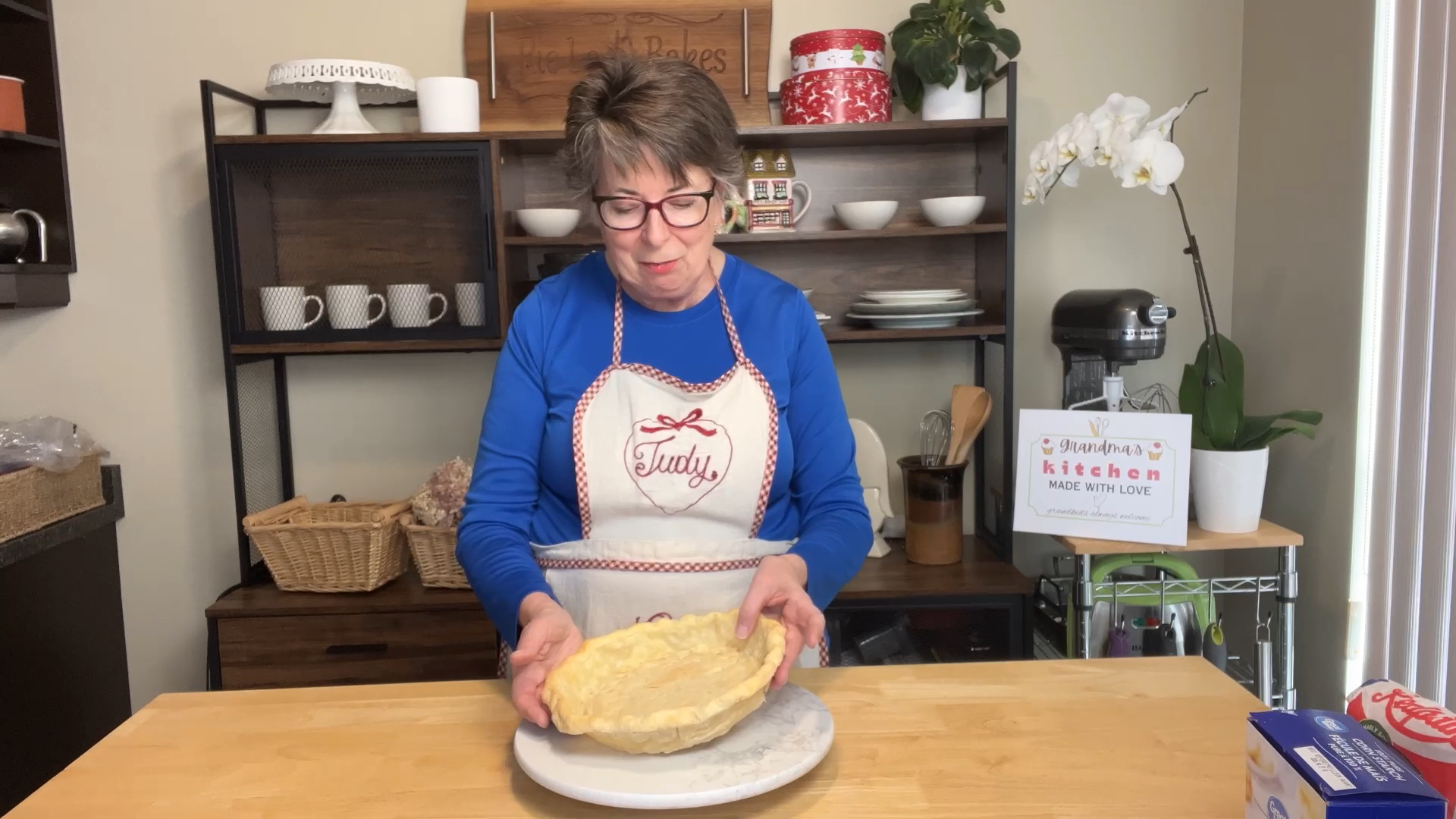
Pie Crust That Behaves, Every Time
My whole pie crust method, from mixing to crimping, plus fixes for soggy bottoms, tough crust and shrinking. Homemade or store-bought.
Sound familiar?
You’re not doing anything wrong. Most crust trouble comes down to three things: temperature, handling and moisture. Once you understand those, pie crust gets a lot easier.
After the Playbook, you’ll be able to
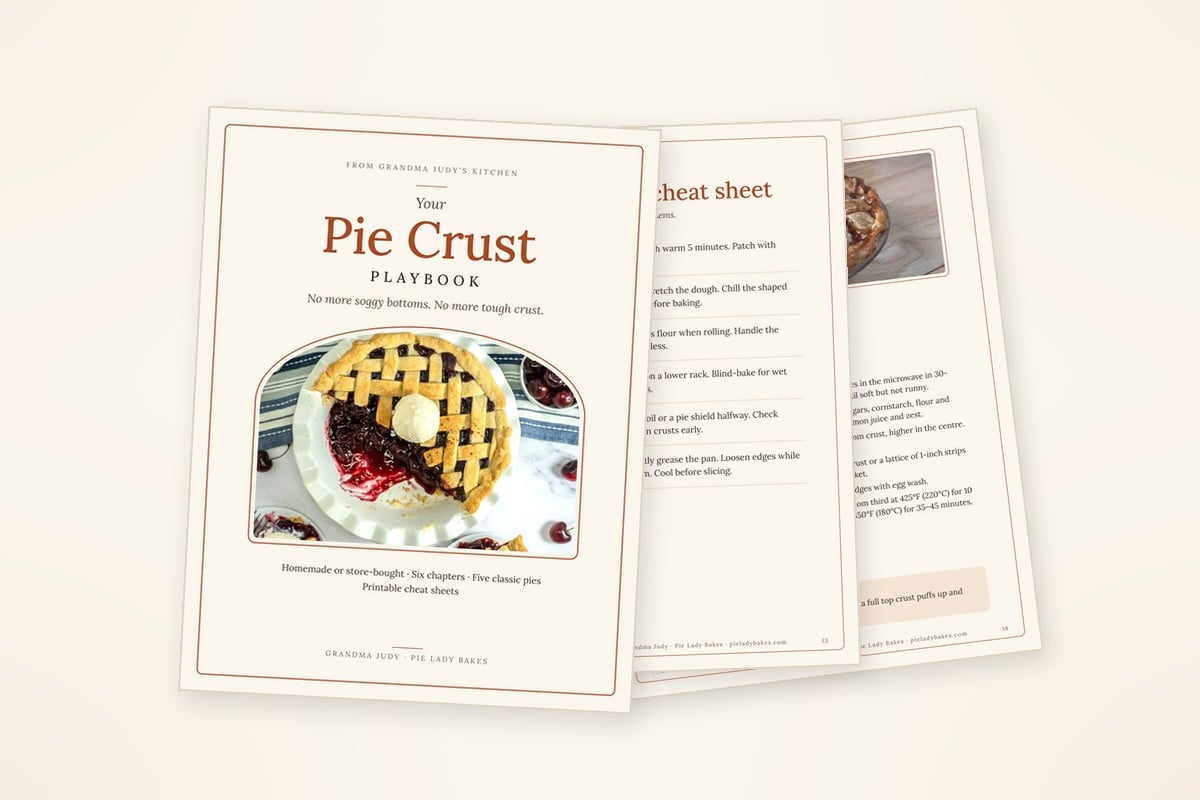
What’s inside
Six short chapters, written the way I’d explain it in my own kitchen:
- Set up for success: cold ingredients, measuring flour, the few tools you need
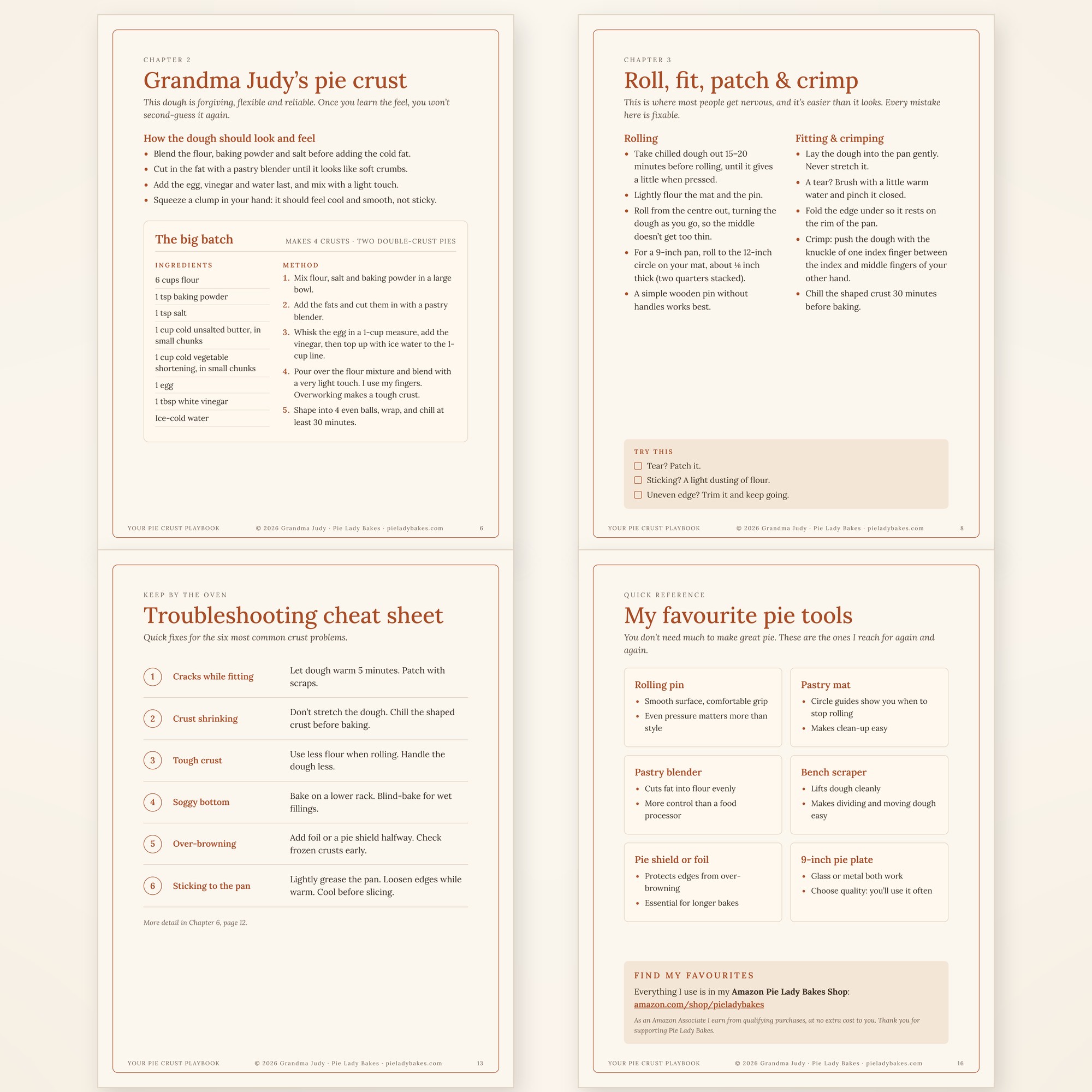
- Grandma Judy’s pie crust: a big batch for the freezer, and a small food-processor batch for one pie
- Roll, fit, patch & crimp: including what to do when it tears
- Blind baking & baking basics: for cream, custard and lemon pies
- Store-bought crust, made better: refrigerated, frozen and deep-dish
- When things go wrong: cracks, shrinking, tough crust, soggy bottoms, overbaking, sticking
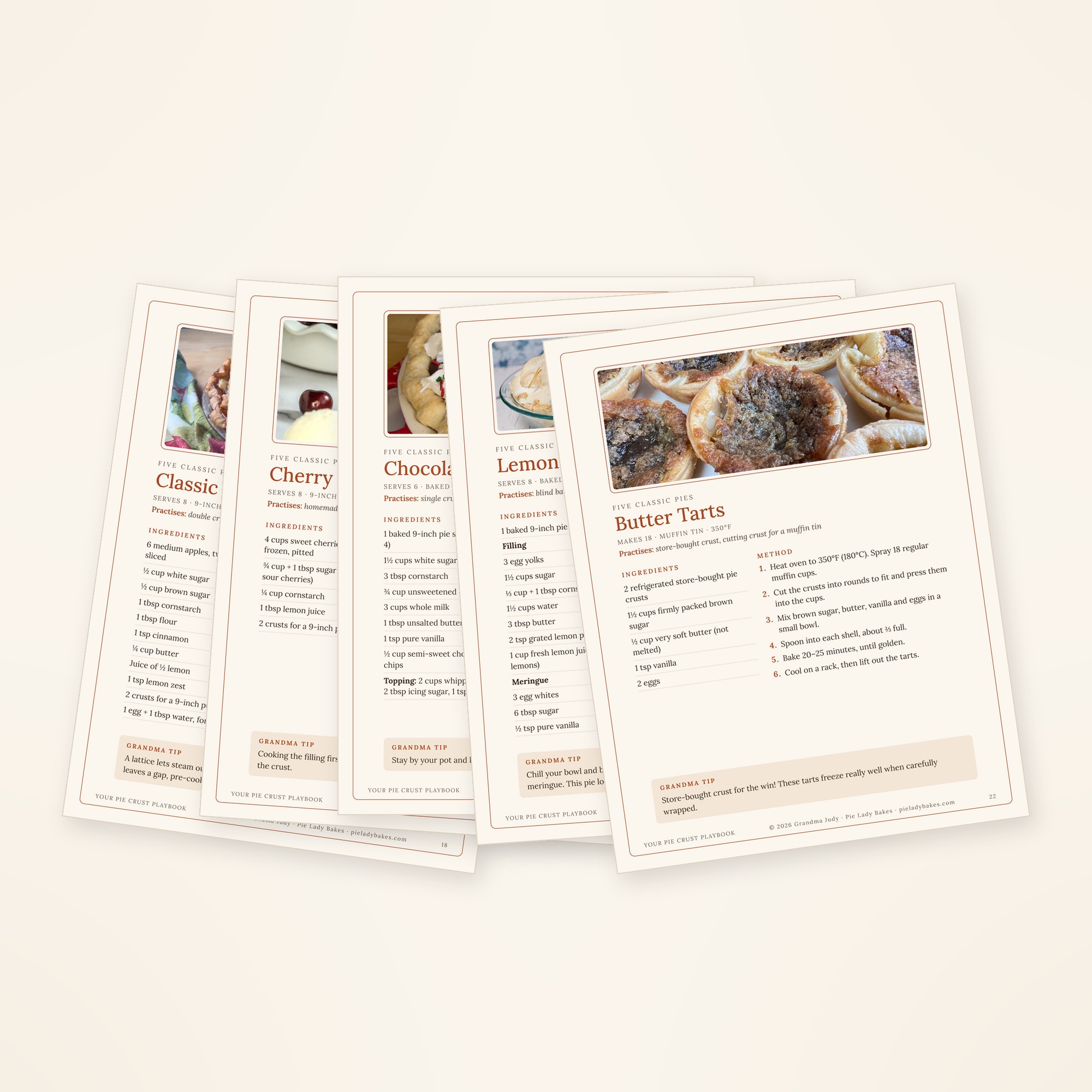
Five classic pies, printed in full
Put the method to work with Classic Apple Pie, Cherry Pie, Chocolate Pie, Lemon Meringue Pie and Butter Tarts. Each one has a photo, the full recipe and a Grandma tip.
Printables to keep by the oven
- Pie Crust Success Checklist
- Store-Bought Crust Guide
- Troubleshooting Cheat Sheet
- Make-Ahead Crust Timeline
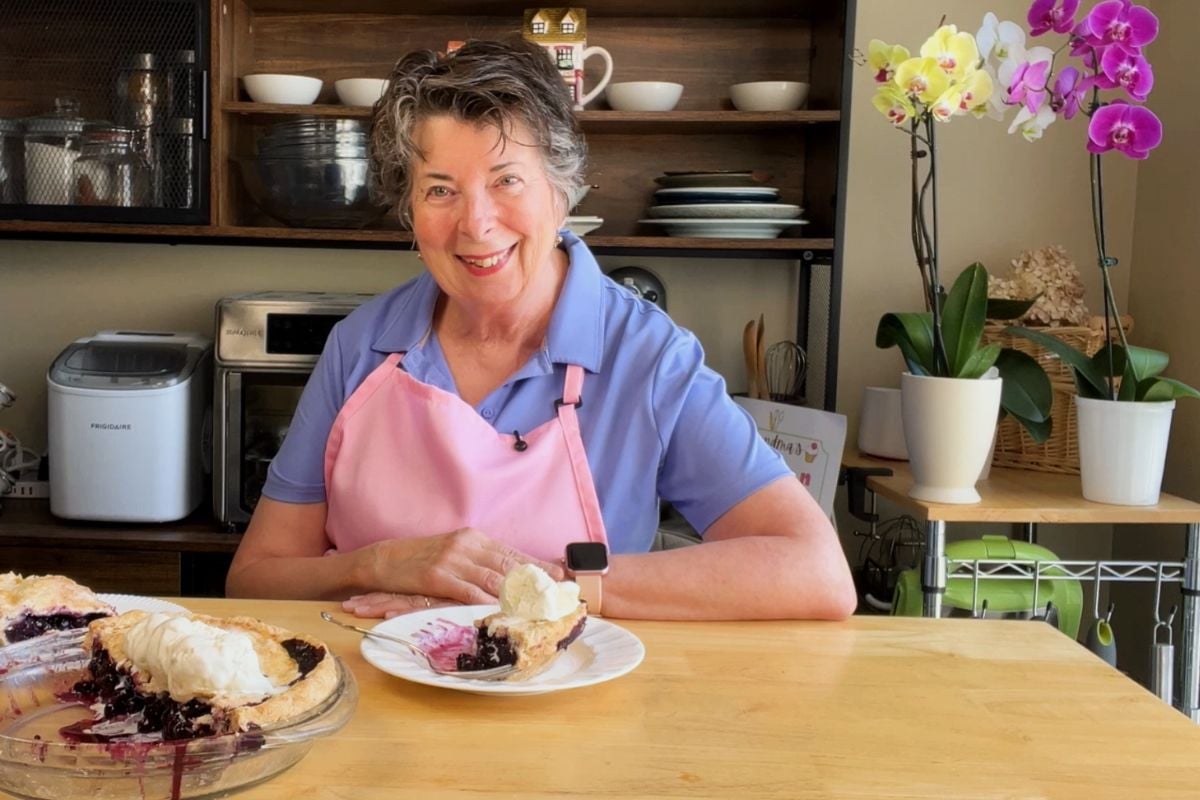
Hi I’m Judy
I’ve been making pies for 50 years, and I started Pie Lady Bakes at 60. Since then I’ve helped thousands of home bakers get better results by focusing on the basics: temperature, mixing, chilling and baking. This playbook puts all of it in one place.
What bakers say about my pie crust
“Easy and perfect.” — Sharon
“It made a perfect crust for tonight’s chicken pot pie. Delicious.” — Fran
“Amazing.” — Joanne
From Pinterest comments on my Food Processor Pie Crust, the same small-batch crust in Chapter 2.
This is for you if….
Who it’s not for….
This is not for you if:
Helpful information…
Ready for Pie Crust that behaves?